1-800 Contacts  ·  Case study

Rapid Reorder Checkout

Staff Product Designer

Rapid Reorder Checkout

When customers already have their shipping, payment, and prescription on file, the checkout should feel like it. I redesigned the returning customer flow from scratch — cleaner structure, transparent pricing, and a one-click path to reorder.

The problem

When existing customers came back to reorder their contact lenses, they were pushed through the same checkout flow as first-time buyers, even though their shipping and payment details were already on file.

The existing cart and checkout had an overly complex information structure that had become cluttered and confusing over time. Returning customers mostly just wanted to edit their order quantity, but that simple task was buried in a convoluted UI. As features were added over the years, the layout and structure of the page were never reconsidered. Customers spent too much time navigating a cluttered interface when all they really needed was a reorder button.

My proposed solution

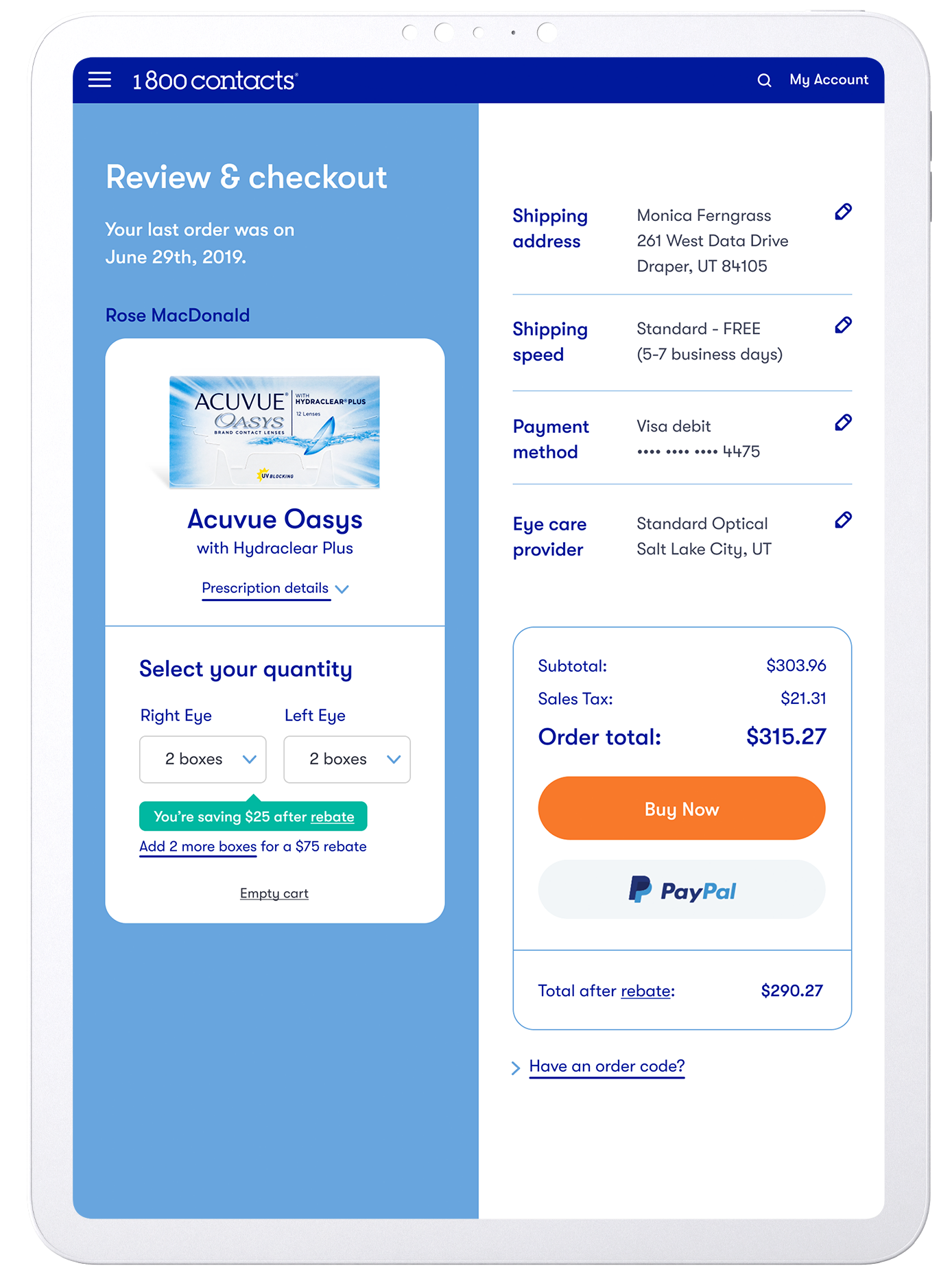
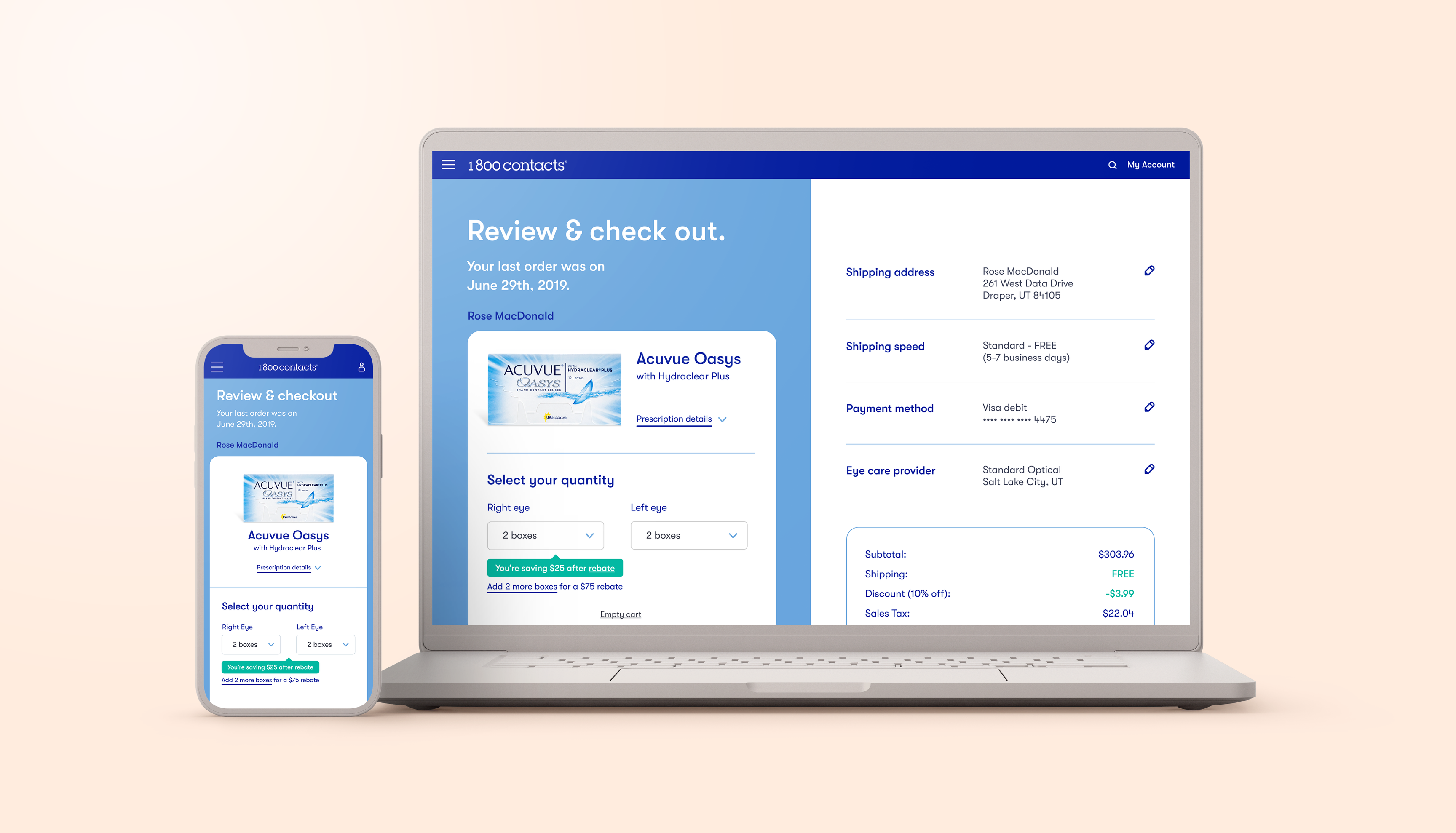
A complete overhaul of the returning customer checkout, with tighter information architecture and refreshed brand aesthetics, without sacrificing any existing functionality.

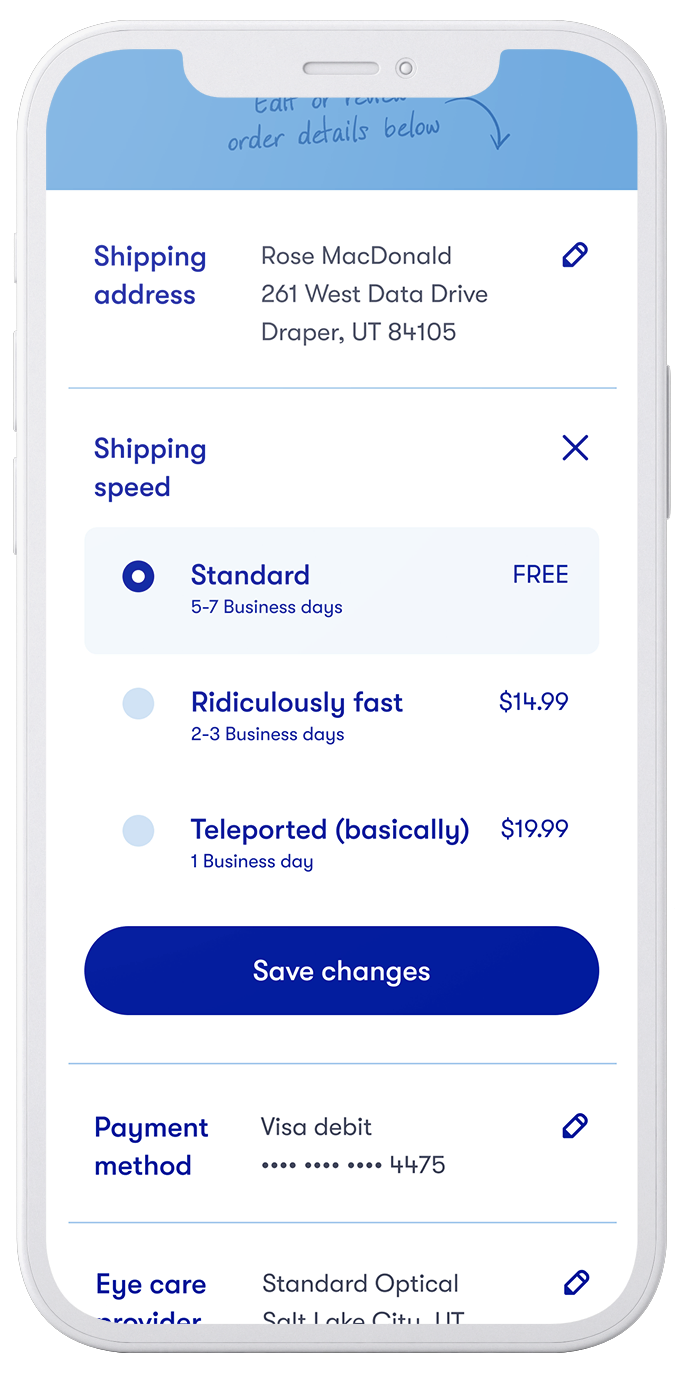
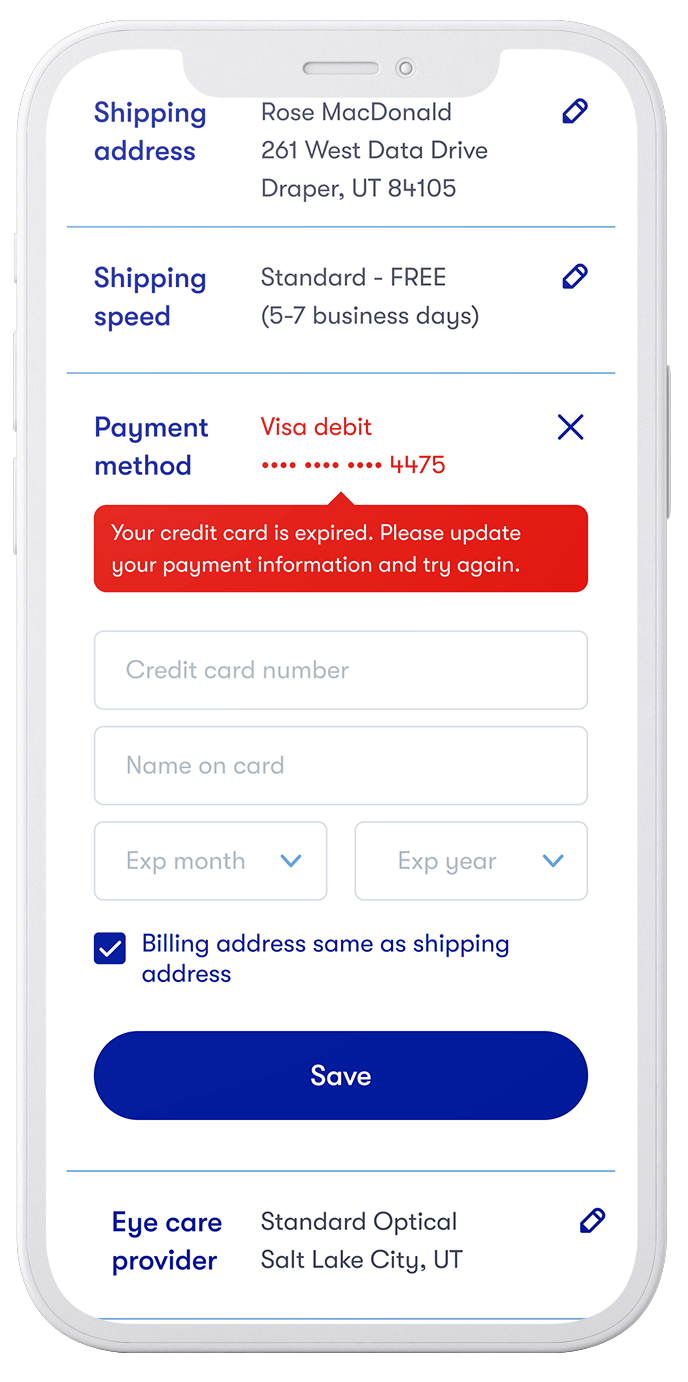
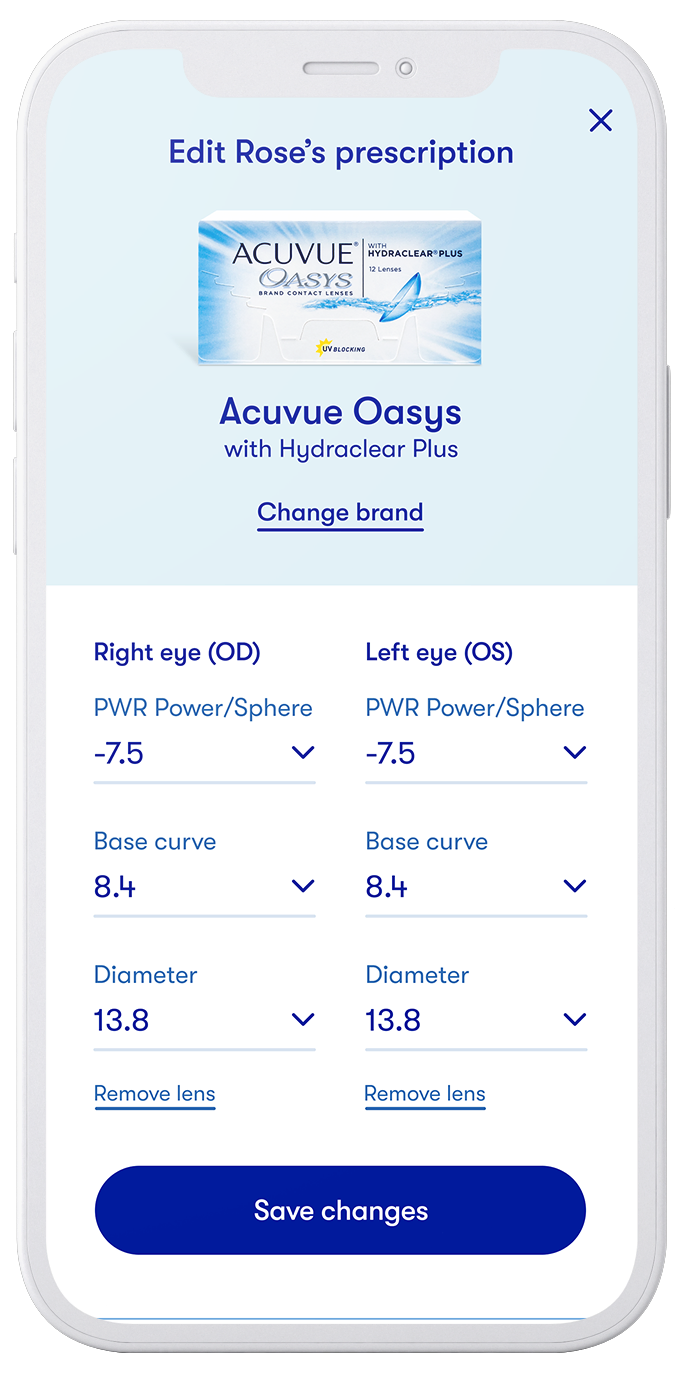
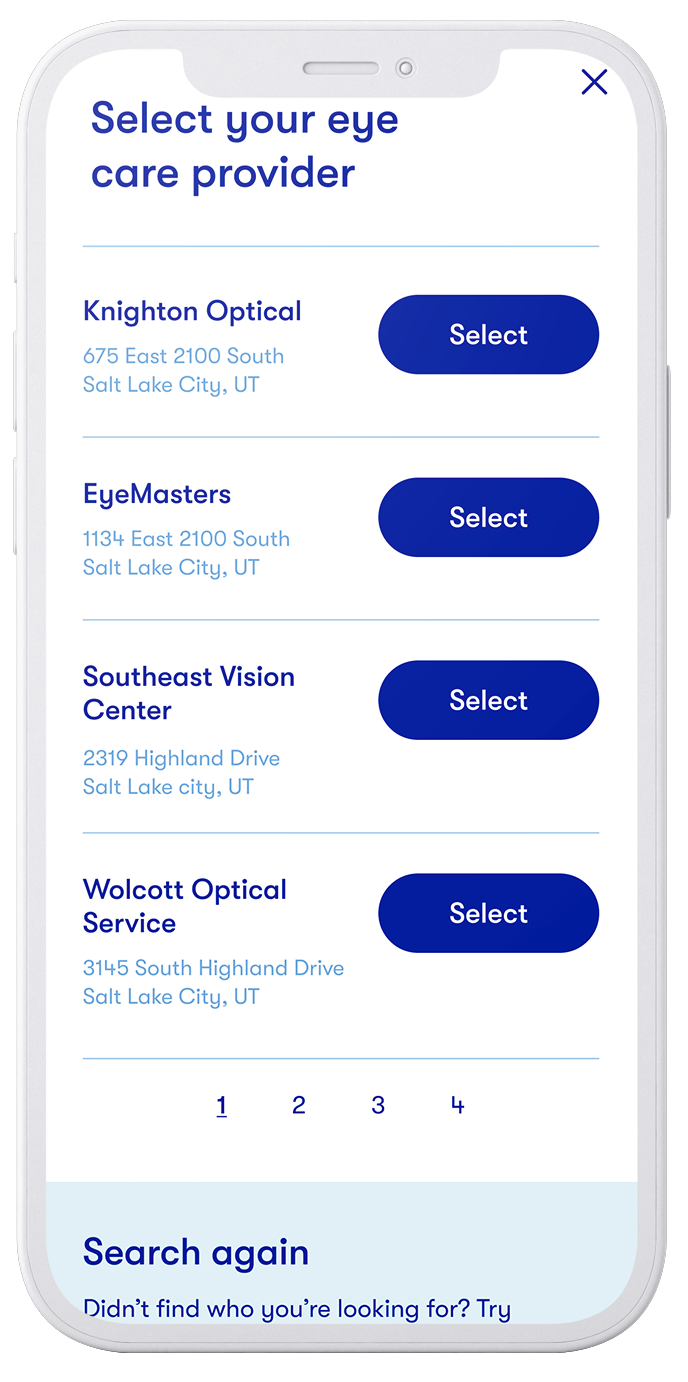
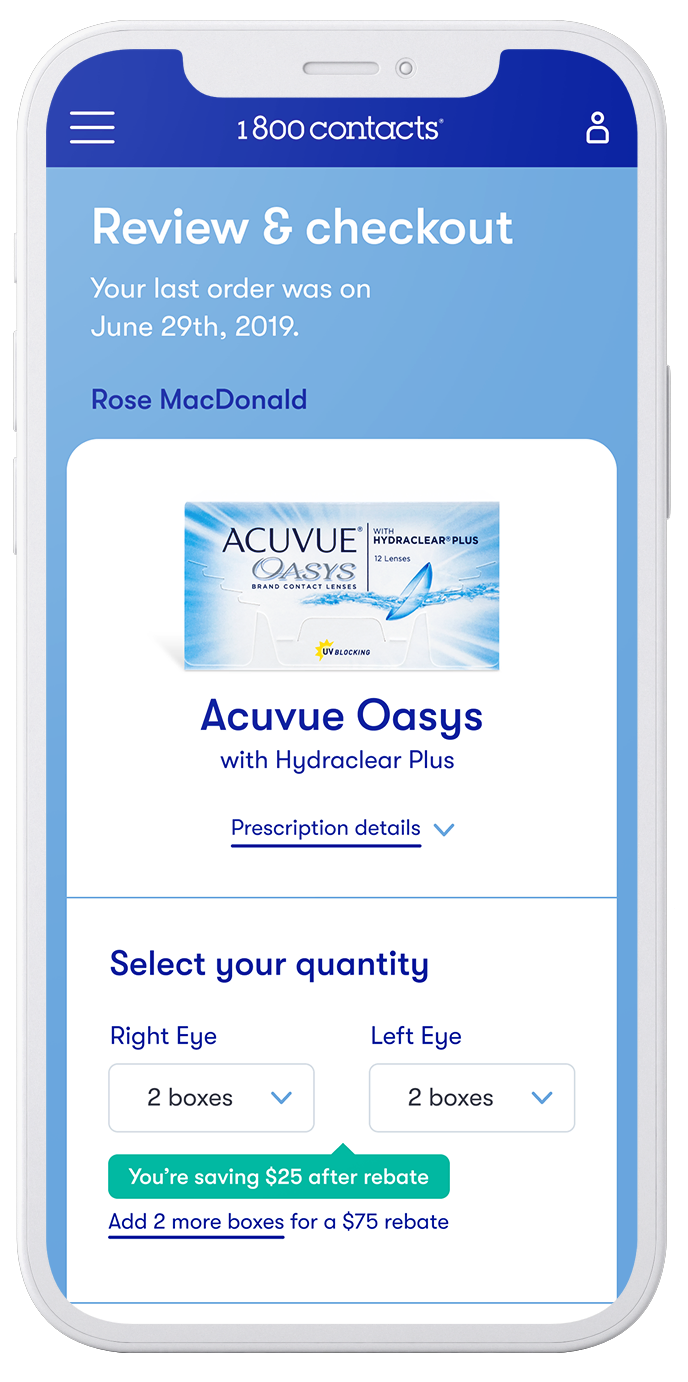
I designed an intuitive, one-page checkout that gives users a clear view of their product, easy verification of prescription details, and simple quantity adjustments. Shipping and payment information is immediately visible and verifiable at a glance, with the goal of making reordering a one-click process. I used strategic color differentiation to divide the interface into two distinct sections: product information and account details, giving users a clear visual hierarchy to navigate.
My approach

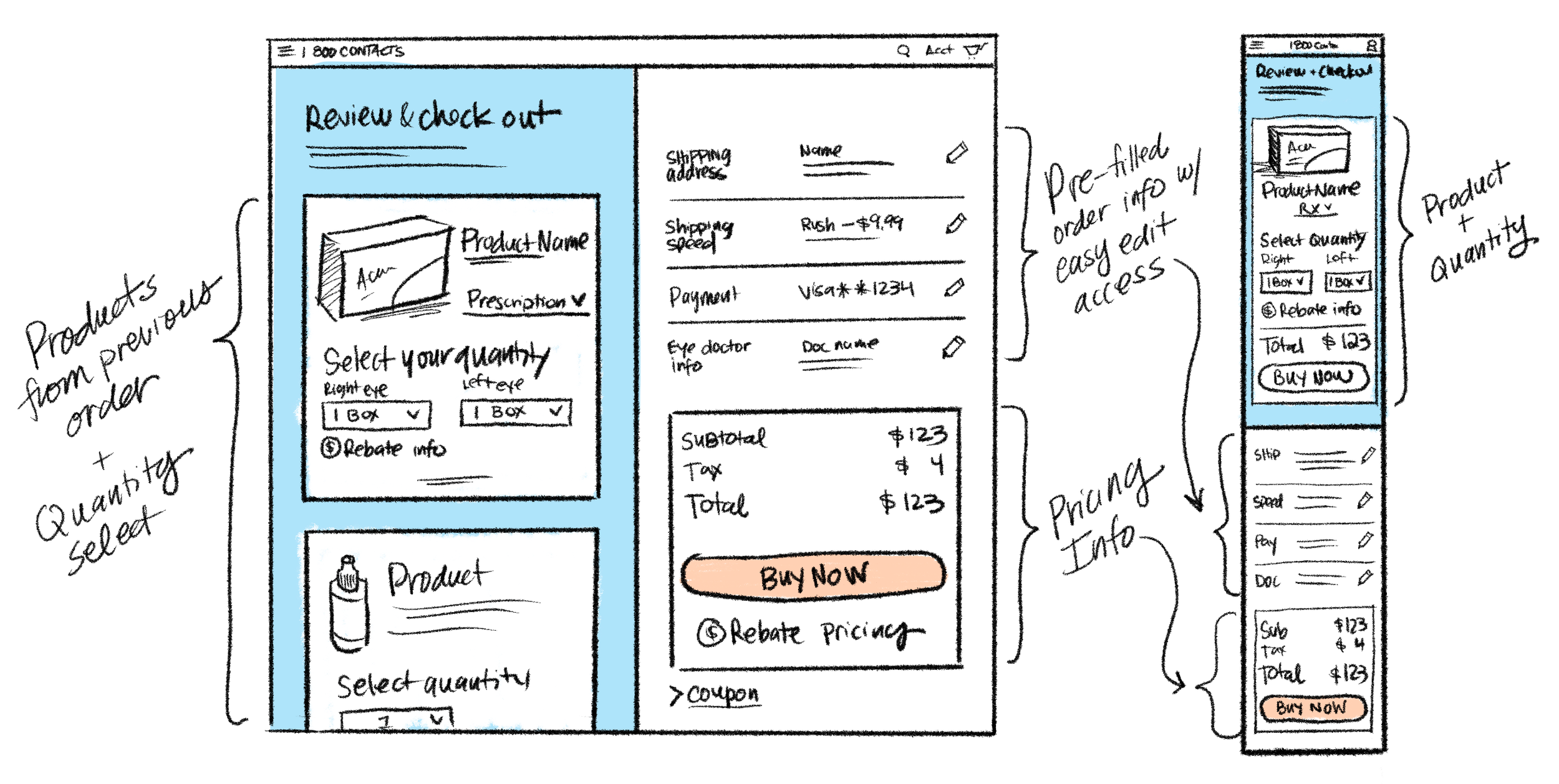
This was a complex checkout involving medical prescriptions, so my priority was to explore multiple solutions and pressure-test them through qualitative user testing. The goal was to declutter the page, highlight key interactions with a well-structured UI, and let non-essential elements recede.

I studied a wide range of checkout experiences, from old-school but functional interfaces to modern, visually polished but less effective ones, assessing strengths and weaknesses across all of them.

My vision was a simple but highly functional interface where users could instantly orient themselves. That meant making product information prominent for easy prescription verification and quantity selection. Above all, pricing needed to be unambiguous and responsive to any edits.

During moderated user sessions, I saw how much customers struggled with the existing system. Contact lens prescriptions are complex, and users were getting lost trying to calculate box quantities per eye, factoring in wear frequency and duration, then layering on rebates, promos, and shipping discounts. Eliminating that confusion and presenting pricing transparently became a core design goal.

This led me to design three distinct solutions for user evaluation. The first was a technically advanced model inspired by Apple Pay's checkout. The second was visually minimal, stripping away unnecessary options. The third blended the best of both: comprehensive functionality in a structured, user-friendly interface. That third option resonated strongly with customers and became the foundation of our MVP.

Outcome

$9.88MM Annual revenue boost
↑ CVR Conversion rate
↑ AOV Average order value

The Rapid Reorder initiative drove increased conversion and significantly larger average orders, resulting in a $9.88 million annual revenue boost. The initial test ran with a small subset of customers but showed clear results immediately. With a cleaner, more digestible layout, customers tended to increase their quantities and order more products. Conversion went up across the board. Customers appreciated a streamlined experience that respected their time.